Insight
Lessons from leading under pressure
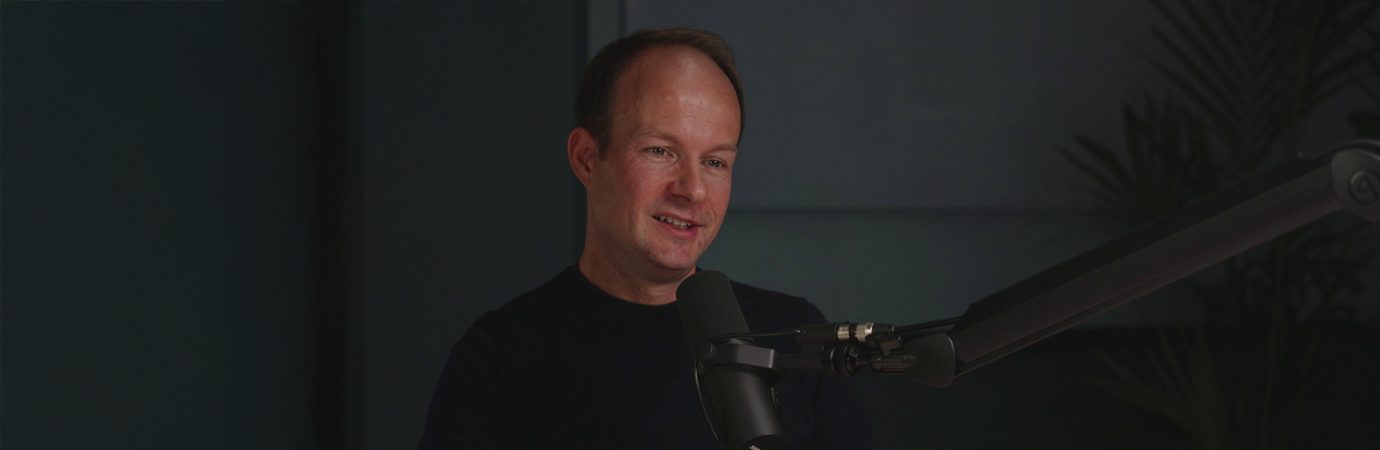
What does leadership look like when options disappear and the cost of every decision becomes personal as well as professional?
Our conversation with Mark Buckley, former CEO of Perfect Moment, on the Chat CFO Podcast gave the answers. Mark led the business through a US IPO after a prolonged and unsuccessful search for alternative funding. Looking back, Mark offers an honest perspective of leadership under pressure, not as a single defining moment, but as an extended period of strain, responsibility, and trade-offs that only fully make sense in hindsight.
When leadership begins after the choices run out
By the time the business reached a US IPO, there was no sense of momentum or optionality. The decision did not come from ambition but from attrition. “After exhausting our efforts in pretty much the whole of 2023 of alternative investment rounds, we proceeded with a US IPO on a business that was doing 25 million in revenue.”
The context around that decision matters. This was not a business designed for public markets, nor one with spare capacity to absorb the process easily. “10 odd million of debt stacked against it, cumulative losses, a team of 30.” At that point, leadership was no longer about choosing the best route forward. It was about committing to the only route left and carrying the consequences of that decision for everyone involved.
“And against all the odds, we managed to get listed on the New York Stock Exchange in February 24.”
Pressure does not arrive in neat phases
One of the things that stands out in Mark’s reflections is how misleading it can be to think of pressure as something that arrives in phases. In reality, everything happened at once.The business still needed fixing. The team still needed direction. The strategy still needed to make sense internally while being sold externally. “It was a gruelling process going through fundraising while transforming a business.”
There was no pause between getting the deal done and getting back to delivery.“And then we’re thinking, that was a lot of work. Now we better deliver the plan.” What often gets missed in leadership stories is that milestones do not reduce pressure. They change its shape.
“Leadership was no longer about choosing the best route forward, it was about committing to the only route left and carrying the consequences for everyone involved.” – Mark Buckley
When responsibility quietly expands
Mark also speaks openly about how quickly responsibility can expand when circumstances shift. He joined Perfect Moment as CFO, expecting to work alongside a CEO. That assumption disappeared almost immediately. “On the day I was joining, or about a week before I joined, the incumbent CEO pulled out.”
What followed was not a short-term gap. “There was a bit of an opportunistic moment for me to do both roles for a period, which ended up being the whole time.” This is a familiar pattern in pressured environments. Someone has to hold the centre while decisions keep coming, and that weight often lands with little warning.
The cost of staying permanently in delivery mode
With hindsight, Mark is clear that sustaining that level of intensity came at a personal cost. At the time, the imbalance felt justified. The business needed it and the situation demanded it. It was only later that the trade-off become obvious for Mark.
“Am I showing up as well for my family as I am when I am in the business and for shareholders? And I definitely got the balance wrong.” This is the part of leadership that rarely features in success narratives. The personal impact can be huge. As leaders, you have to make sure the work still gets done because there is so much responsibility that sits on your shoulders, but something else is quietly deferred.
What reflection reveals after the pressure lifts
For the first time in his career, Mark stepped back long enough to reflect. “I’ve never really taken time to pause.” That pause exposed patterns that had previously been invisible. “I’ve been so driven by my intellect and it’s served me well, but I’ve suppressed the other feeling.” Emotional control had been praised throughout his career, but it came with unintended consequences. “One of my traits is being incredibly calm. Nothing ruffles me.” That calmness applied across the board. “But that would also be the same in sadness. And then when it’s joy, well, I’m not experiencing the joy.”
His reflection is stark and a sense of reflection and honesty that you don’t get from most leaders. “Then you’re just a human doing, not a human being.”
Leadership lessons that only arrive afterwards
Looking back though, Mark does not frame the experience as a mistake. He frames it as education that arrived late. The hardest part was never any single decision or milestone. It was the sustained intensity, the absence of pause, and the assumption that holding everything together simply meant pushing on. For Mark, it was only with distance that it became obvious how rarely there had been space to step back, reflect, or to notice what was being traded away in the process. Advice that had long been offered to others about slowing down or creating room to think had never really been applied inward. That realisation reframes the entire experience. Not as a story about endurance or sacrifice, but as one about awareness arriving late, yet still in time to impact what you do next. It is a reminder that leadership under pressure is not only about what you deliver, but about how consciously you choose to carry it, and what you decide not to postpone indefinitely.
One of my traits is being incredibly calm. Nothing ruffles me. But that would also be the same in sadness. And then when it’s joy, well, I’m not experiencing the joy. Then you’re just a human doing, not a human being.” – Mark Buckley
Key takeaways
- Leadership under pressure often begins when optionality disappears
- Major business milestones rarely happen in isolation, transformation and delivery continue in parallel
- Roles expand quickly, and leaders often carry responsibility beyond their formal remit
- Emotional control can support performance, but suppressing feeling has long-term consequences
- Reflection usually comes after the hardest work is done, but it shapes what comes next
Listen to this episode of the STOIX Podcast
To hear Mark’s full conversation, watch the complete podcast episode here:


To connect with Mark or explore more of his experience and insights, head over to Mark’s LinkedIn profile.